Is DMCA Ignored Hosting Legal?
Many website owners worry about copyright complaints when choosing a hosting provider. When a website hosts copyrighted content without permission, the hosting company may receive a request to remove that material. These requests are usually sent under the Digital Millennium Copyright Act (DMCA).
Most traditional hosting companies strictly follow DMCA rules. If they receive a valid complaint, they may remove the content or suspend the website. Because of this, some website owners look for DMCA ignored hosting, which is usually offered by offshore hosting providers.
However, an important question often comes up: Is DMCA ignored hosting legal?
The answer is not always simple because it depends on several factors, including the location of the server, the laws of the country where the hosting provider operates, and the type of content being hosted. Understanding how copyright law works globally can help clarify this topic.
Table of Contents
What Is DMCA?
The Digital Millennium Copyright Act (DMCA) is a copyright law introduced in the United States in 1998. It was designed to protect digital content such as music, movies, software, images, and written material from unauthorized distribution on the internet.
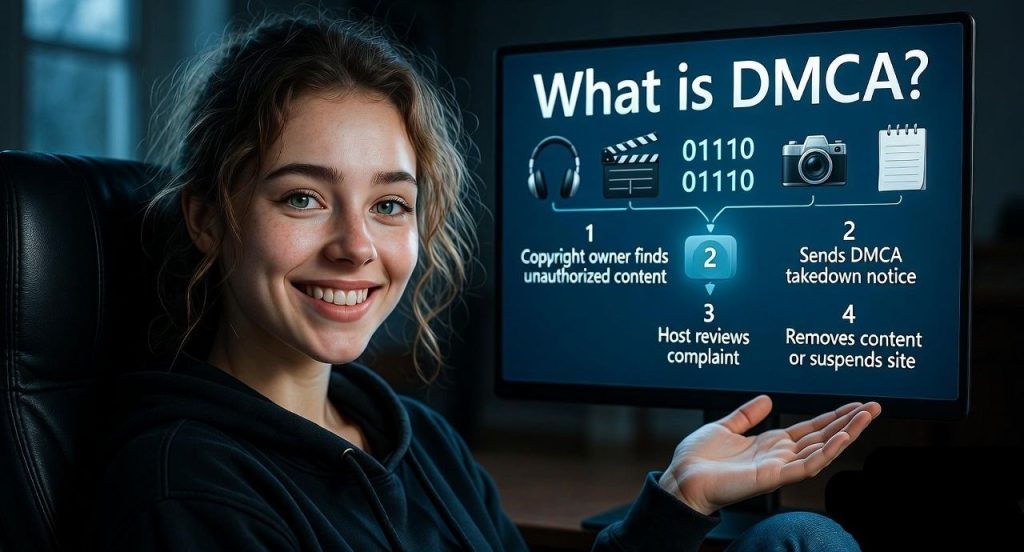
Under this law, copyright owners can send a DMCA takedown notice if their content appears on a website without permission. Hosting companies that operate in the United States usually follow a clear process when they receive such complaints.
Typically, the process works like this:
- A copyright owner finds their content being used without permission.
- They send a DMCA takedown notice to the hosting provider.
- The hosting company reviews the complaint.
- The provider may remove the content or temporarily disable the website.
This system allows hosting companies to avoid legal liability while protecting copyright owners.
What Is DMCA Ignored Hosting?
DMCA ignored hosting refers to web hosting services that claim they do not automatically act on DMCA takedown requests.
These providers usually operate in offshore locations, meaning their servers and businesses are located outside the United States. Because the DMCA is a US law, hosting providers in other countries are not legally required to follow it.
However, this does not mean the provider completely ignores all complaints. Most offshore hosting companies still follow their own local regulations and internal policies when dealing with copyright issues.
The term “DMCA ignored hosting” is mostly a marketing phrase used by some offshore hosting providers to describe their flexible approach to copyright complaints.
How DMCA Laws Apply to Hosting Providers
Understanding the legality of DMCA ignored hosting requires knowing how copyright laws apply in different countries.
DMCA Compliance in the United States
Hosting providers located in the United States must comply with the DMCA. If they ignore valid copyright complaints, they can face legal penalties.
Because of this risk, US based hosting companies usually respond quickly to DMCA notices.
Copyright Policies in Other Countries
Many countries have their own copyright laws, which may not follow the same procedures as the DMCA. Some countries require a court order before content can be removed, while others allow hosting providers to handle complaints internally.
This difference in legal systems is the main reason offshore hosting services exist.
Role of Hosting Providers
Even offshore providers must operate within the laws of the country where their servers are located. They may ignore DMCA notices specifically, but they cannot ignore local copyright laws.
Is DMCA Ignored Hosting Legal?
In general, DMCA ignored hosting itself is not illegal.
The DMCA is a law created by the United States government, which means it mainly applies to hosting providers located in the United States or operating under US jurisdiction.
Hosting providers located in other countries are governed by their local copyright laws, not the DMCA. Because of this, they are not legally required to respond to DMCA takedown notices in the same way as US hosting companies.
However, legality also depends on the content hosted on the server. Even if a provider advertises DMCA ignored hosting, the website owner is still responsible for ensuring that the content follows the laws of the country where the server is located.
For example:
- Hosting itself may be legal
- Certain types of copyrighted content may still be illegal under local laws
- Governments can still take action if laws are violated
Therefore, DMCA ignored hosting does not guarantee complete legal protection.
Countries Where DMCA Ignored Hosting Is Common
Several countries are known for hosting providers that advertise flexible copyright complaint policies.
- Netherlands: The Netherlands has a large internet infrastructure and major data centers. Some offshore hosting companies operate there with different complaint handling processes.
- Russia: Some hosting providers in Russia offer offshore hosting services that respond differently to copyright complaints compared to US companies.
- Bulgaria: Bulgaria has appeared in offshore hosting discussions because certain providers operate servers there with flexible policies.
- Hong Kong: Hong Kong has historically been a popular hosting location because of strong internet connectivity and independent hosting regulations.
- Seychelles: Some hosting companies register their businesses in jurisdictions like Seychelles because of privacy friendly business regulations.
- Moldova: A few offshore hosting providers operate servers in Moldova due to its regulatory environment.
It is important to remember that laws can change, and not every provider in these countries offers DMCA ignored hosting.
Legal Risks of Using DMCA Ignored Hosting
Although DMCA ignored hosting can offer more flexibility, there are still risks that website owners should consider.
- Copyright Enforcement: Even when a hosting provider ignores DMCA notices, copyright owners may still take legal action in certain situations, especially if the website operates internationally.
- Jurisdiction Issues: Different countries have different legal systems. A website that appears legal in one country may violate copyright laws in another.
- Provider Policies: Many offshore hosting providers still enforce certain rules and may suspend websites involved in illegal activities such as fraud, malware distribution, or scams.
- Reputation Concerns: Some offshore hosting companies have weaker reputations due to poor support or unreliable infrastructure.
DMCA Ignored Hosting vs Standard Hosting
The differences between traditional hosting and offshore DMCA ignored hosting are easier to understand with a comparison.
| Feature | Standard Hosting | DMCA Ignored Hosting |
| Copyright Enforcement | Strict compliance | Flexible policies |
| Server Location | US / EU | Offshore countries |
| Complaint Handling | Immediate response | Depends on provider |
| Risk of Suspension | Higher | Usually lower |
| Legal Framework | DMCA law | Local jurisdiction |
This difference is why some website owners choose offshore hosting environments.
Who Typically Uses DMCA Ignored Hosting?
Several types of websites commonly look for offshore hosting environments.
These may include:
- File hosting platforms
- Streaming websites
- Torrent related services
- Privacy focused communities
- Independent publishing platforms
Some researchers and archival projects also use offshore hosting to maintain long term content availability.
Important Things to Consider Before Using It
Before choosing DMCA ignored hosting, website owners should carefully consider several factors.
- Understand Local Laws: The legality of hosted content depends on the laws of the country where the server is located.
- Research the Hosting Provider: Not all offshore hosting providers are reliable. It is important to choose companies with stable infrastructure and transparent policies.
- Check Terms of Service: Many providers still prohibit certain activities such as hacking, phishing, or malware hosting.
- Evaluate Long Term Stability: Websites should consider network quality, uptime reliability, and technical support when choosing hosting providers.
How to Choose a Safe Offshore Hosting Provider
Selecting a reliable hosting company requires careful research.
Some important factors include:
- Clear information about server locations
- Professional data center infrastructure
- Transparent privacy policies
- Reliable customer support
- Stable network performance
A trustworthy hosting provider should offer both flexibility and technical reliability.
Conclusion
DMCA ignored hosting refers to offshore hosting services that do not automatically follow United States DMCA takedown procedures. Because the DMCA is a US law, hosting providers located in other countries are generally governed by their own local copyright regulations.
In many cases, using DMCA ignored hosting is legal. However, the legality of the hosted content still depends on the laws of the country where the server operates. Website owners remain responsible for the material they publish, even when using offshore hosting services.
Understanding how international copyright laws and hosting regulations work helps website owners make informed decisions about choosing the right hosting environment for their projects.