
Are DMCA Notices Enforceable Abroad?
You found your content copied on another website, and now you’re thinking, can a DMCA notice fix this if the site is outside the United States? Inside the US, things are clear and action is usually quick. But once the content is hosted in another country, the process does not work the same way, and that’s where most people get confused.
This is exactly what you need to understand properly. Here, you’ll see how DMCA actually works, where it stops working, and what you can do when your content is hosted abroad. You’ll also get clear answers, practical steps, and the right approach so you don’t waste time using the wrong method.
Table of Contents
What Is a DMCA Notice?
A DMCA (Digital Millennium Copyright Act) notice is a formal request sent by a copyright owner (or their representative) to remove content that is being used without permission.
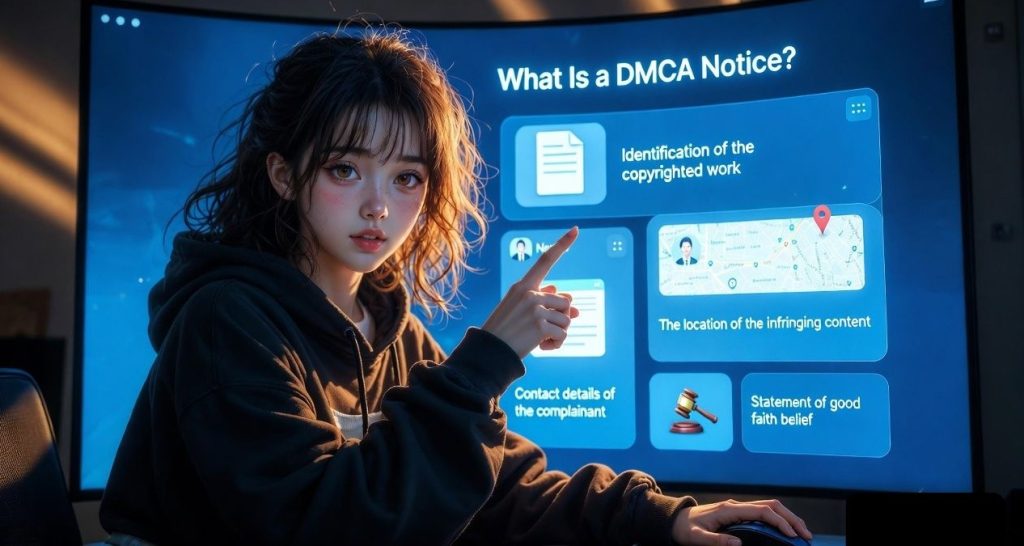
It typically includes:
- Identification of the copyrighted work
- The location of the infringing content
- Contact details of the complainant
- A legal declaration of ownership
This system is designed to protect creators and provide a quick way to remove unauthorized content online.
How DMCA Enforcement Works in the United States
So, how does DMCA actually work in the United States?
If someone uses your content without permission and you send a valid DMCA notice, the platform or hosting provider doesn’t ignore it. They are legally expected to take it seriously.
What Happens After You Send a DMCA Notice?
Here’s what usually happens step by step:
- First, your request gets reviewed: The platform checks whether your DMCA notice is valid and complete.
- Then, action is taken quickly: If everything is correct, they usually remove the content or block access to it. This often happens fast because they don’t want legal trouble.
- Why do they act so fast?: Because of something called safe harbor protection.
What Is Safe Harbor and Why Does It Matter?
Think of safe harbor as a legal shield.
Platforms like hosting providers or websites are protected from copyright issues caused by users, but only if they follow the rules. One of the main rules is:
They must respond properly to DMCA notices.
If they ignore your complaint, they risk losing that protection.
What If They Ignore Your Notice?
Now you might ask, what happens if they don’t take action?
In that case:
- They can lose their legal protection
- They may face copyright liability
- It can even lead to legal consequences
That’s exactly why most platforms don’t take any chances.
So, Is DMCA Effective in the US?
Yes, very much.
Because the law is clear and strict, platforms usually act quickly. That’s why DMCA is considered one of the most reliable ways to remove unauthorized content in the United States.
If you’re looking for a reliable DMCA ignored hosting provider, you can check the Top DMCA Ignored Hosting Providers to find trusted options with strong privacy and flexible policies.
Are DMCA Notices Enforceable Abroad?
DMCA notices work very well in the United States, but the situation changes when the content is hosted in another country.
In most cases, DMCA notices are not directly enforceable outside the US. The reason is simple, DMCA is a law created under the United States legal system, and its authority does not automatically apply in other countries.
Why DMCA Does Not Work the Same Internationally
- It is a US-based law: DMCA only has legal power within the United States.
- Every country follows its own copyright system: Other countries are not legally required to follow DMCA rules.
- Legal authority is limited by borders: Laws generally apply only within the country where they are created.
What This Means for You
If you send a DMCA notice to a foreign hosting provider, they may or may not take action. It completely depends on their local laws and internal policies.
Outside the US, a DMCA notice works more like a request than a legally binding order.
Why DMCA Does Not Automatically Apply Internationally
The main reason comes down to one thing — jurisdiction.
Every country has its own legal system and its own copyright laws. A law made in one country does not automatically apply in another, even if the issue is related to the same type of content.
Key Things to Understand
- Legal authority is limited by borders: Laws generally apply only within the country where they are created.
- Each country follows its own copyright rules: Governments enforce their own laws based on their legal system.
- There is no single global law like DMCA: While international agreements exist, there is no universal system that works exactly like DMCA everywhere.
What This Means in Practice
Because of this, copyright enforcement outside the United States depends on local laws and procedures, not on DMCA itself.
That’s why taking action internationally often requires following the legal system of the country where the content is hosted.
How Copyright Is Enforced Internationally
Even though DMCA does not apply worldwide, copyright protection still exists across most countries.
This is possible because of international agreements such as the Berne Convention, which allows creative work to be recognized and protected beyond the country where it was created.
How It Works Globally
- Creative work is protected across member countries: Once your content is created, it receives protection in many countries that are part of the agreement.
- Authors’ rights are recognized internationally: Your ownership is acknowledged even outside your home country.
- Enforcement is handled locally: Each country applies and enforces its own copyright laws based on its legal system.
What This Means
While your content may be protected in different countries, any action against copyright infringement must follow the legal process of the country where the content is hosted.
When DMCA Notices May Still Work Abroad
DMCA notices are not legally enforceable outside the United States, but they can still produce results in certain situations.
Their effectiveness depends more on the platform’s policies and business presence than on legal obligation.
Situations Where DMCA Can Still Be Effective
- Providers that follow DMCA-like policies: Some hosting companies adopt DMCA-style rules as part of their internal process, even outside the US.
- Companies with US business presence: Platforms connected to the US often respond to avoid legal risks or maintain compliance.
- Globally operating platforms: Large websites usually apply uniform copyright policies across all regions.
- Content violating local copyright laws: If the reported material also breaks local laws, action becomes more likely.
What This Means
In these situations, a DMCA notice can still lead to content removal. The decision depends on the provider’s policy and legal exposure, not on DMCA authority itself.
When DMCA Notices Are Ignored
There are situations where DMCA notices are not effective.
This usually happens when:
- The hosting provider operates in a country with different legal requirements
- There is no obligation to follow DMCA law
- The provider prioritizes local regulations over foreign requests
- The hosting environment is designed to allow more content flexibility
This is common with certain offshore hosting providers.
DMCA vs Local Copyright Laws
It is important to understand that DMCA is not the only system for handling copyright issues. It is a US-specific law, while other countries follow their own legal frameworks and procedures.
Across the world, copyright enforcement works differently, and this directly affects how complaints are handled.
Key Differences Between DMCA and Local Laws
| Feature | DMCA (United States) | Local Copyright Laws (Other Countries) |
| Legal Scope | Applies mainly in the US | Applies within each country |
| Enforcement Authority | Backed by US law | Based on local national laws |
| Takedown Process | Standardized notice system | Varies by country |
| Response Time | Usually fast (safe harbor rules) | Can vary widely |
| Legal Requirement | Mandatory for US providers | Not required to follow DMCA |
| Global Applicability | Limited outside the US | Relevant within local jurisdiction |
Why This Difference Matters
- Europe Follows Regional Directives: Many European countries follow EU copyright frameworks with their own reporting systems.
- Asia Uses National Laws: Countries in Asia rely on their own legal processes, which can differ significantly from DMCA.
- Enforcement Is Not Uniform: Response times, complaint formats, and legal actions vary depending on the country.
Because of these differences, a local legal complaint is often more effective than a DMCA notice when dealing with content hosted outside the United States.
What You Can Do If Content Is Hosted Abroad
When your content is used without permission on a server located in another country, action is still possible. The approach just needs to match the laws and systems of that country.
Practical Steps You Can Take
- Contact the hosting provider directly: Send a clear and detailed complaint with proof of ownership and the exact location of the content.
- Use the platform’s reporting system: Most websites have their own copyright complaint process, which is often the fastest way to get a response.
- File a complaint under local copyright law: Taking action through the country’s legal system increases the chances of enforcement.
- Consider legal support for serious cases: For repeated or high-impact violations, professional legal help can be more effective.
Why This Approach Matters
Following the correct legal process improves the chances of content removal and helps avoid delays or rejection.
Common Misconceptions
There are several misunderstandings about how DMCA works, especially when it comes to international cases. Clearing these up helps avoid confusion and wrong expectations.
What People Often Get Wrong
- DMCA works everywhere: This is incorrect. DMCA is limited to the United States and does not automatically apply in other countries.
- Offshore hosting cannot be controlled: This is misleading. Hosting providers still operate under local laws, and action can be taken through those legal systems.
- No action is possible internationally: This is not true. Action is possible, but it requires following the legal process of the country where the content is hosted.
- DMCA guarantees global content removal: This is false. Enforcement depends on jurisdiction, platform policies, and local copyright laws.
Pros and Limitations of DMCA Notices Internationally
DMCA notices can still be useful in international cases, but they also come with clear limitations. Understanding both sides helps in choosing the right approach.
Advantages
- Works effectively with US-based platforms: Strong legal backing ensures faster response and content removal.
- Sometimes accepted by global companies: Many large platforms follow standard copyright policies and may act on DMCA notices even outside the US.
- Quick and simple starting point: Filing a DMCA notice is often the easiest first step before taking further action.
Limitations
- No legal authority outside the US: DMCA does not apply directly in other countries.
- Depends on provider cooperation: Action is not guaranteed and varies based on platform policies.
- May require legal escalation: In some cases, you may need to follow local legal procedures or take formal action in another country.
Who Should Care About This
This topic matters more than it may seem, especially for anyone dealing with online content across different countries.
Who It Applies To
- Content creators: Anyone who wants to protect their original work from being copied or misused online.
- Website owners: Those hosting content that can be accessed globally and may face copyright issues across borders.
- Businesses operating internationally: Companies working in multiple countries where content protection and compliance become more complex.
- Digital publishers and media platforms: Platforms that regularly publish, share, or manage large volumes of content.
Conclusion
DMCA notices are powerful within the United States, but their authority does not automatically extend beyond it. When dealing with international cases, enforcement depends on local laws, jurisdiction, and the policies of the hosting provider.
Understanding this difference is essential. Instead of relying solely on DMCA, a more effective approach is to use the appropriate legal framework in the country where the content is hosted.
With the right strategy, copyright protection can still be enforced globally, but it requires awareness, patience, and the correct legal approach.