
Is Offshore Hosting Legal?
When choosing a web hosting service, many website owners consider where their servers will be located. While most people host their websites in their own country, some choose servers located in another country. This practice is commonly known as offshore hosting.
Offshore hosting is often associated with privacy protection, international business operations, and flexible hosting regulations. Because of these factors, many people wonder whether offshore hosting is legal or if it creates legal risks for website owners.
The legality of offshore hosting depends on several factors, including the country where the server is located, the laws that apply to the hosting provider, and the type of content hosted on the website. Understanding how international hosting laws work can help website owners make informed decisions before choosing an offshore hosting provider.
Table of Contents
What Is Offshore Hosting?
Offshore hosting refers to hosting a website on servers located in a different country than the website owner’s country of residence or business operation.
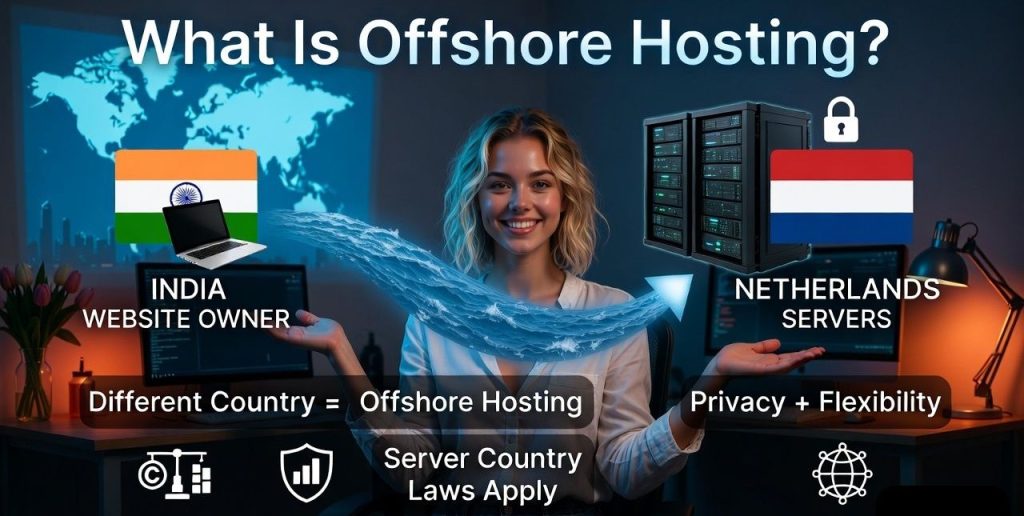
For example, a website owner in India may choose to host their website on servers located in the Netherlands or Switzerland. In this case, the website is considered to be hosted offshore.
The main reason offshore hosting works differently from local hosting is legal jurisdiction. When a website is hosted in another country, the hosting provider must follow the laws and regulations of the country where the servers are located.
This means that hosting policies, copyright enforcement, and data protection rules may differ from those in the website owner’s home country.
How Hosting Laws Work Internationally
To understand whether offshore hosting is legal, it is important to understand how laws apply to websites and hosting providers.
Server Location Jurisdiction
The most important legal factor in hosting is server location. Hosting providers must follow the laws of the country where their servers operate. This includes regulations related to copyright, data protection, cybersecurity, and online services.
For example, if a website is hosted on servers in the Netherlands, Dutch laws and regulations apply to the hosting provider.
Website Owner Responsibility
Even when using offshore hosting, website owners remain responsible for the content they publish. Hosting in another country does not remove legal responsibility for illegal activities such as copyright violations, fraud, or cybercrime.
International Internet Regulations
The internet operates globally, but certain international regulations and agreements still affect websites across borders. Governments and legal authorities may cooperate in cases involving serious violations such as cybercrime or illegal online services.
Is Offshore Hosting Legal?
In most situations, offshore hosting itself is legal.
Hosting a website in another country simply means that the website’s data is stored on servers located outside the website owner’s home country. Many international businesses use this approach to reach global audiences or operate under different regulatory environments.
However, the legality of offshore hosting depends on two key factors:
- The laws of the country where the server is located
- The type of content hosted on the website
Hosting providers must follow the legal regulations of their jurisdiction, and website owners must ensure their content does not violate applicable laws.
For example, hosting copyrighted material without permission may still lead to legal action, even if the server is located offshore. Similarly, illegal activities such as fraud, hacking, or malware distribution remain prohibited in most countries regardless of server location.
Therefore, offshore hosting is legal as a hosting method, but the content hosted on the server must comply with relevant laws.
When Offshore Hosting May Create Legal Issues
Although offshore hosting is generally legal, certain situations may create legal problems.
- Copyright Violations: Hosting copyrighted content without permission can lead to legal complaints or takedown requests from copyright owners.
- Illegal Online Services: Websites involved in illegal activities such as fraud, phishing, or selling illegal goods may face legal action regardless of server location.
- Data Protection Violations: Some countries enforce strict data protection laws that affect how user information is stored and processed.
- Ignoring Legal Orders: In certain situations, authorities may issue court orders related to hosted content. Ignoring valid legal orders can create legal risks for hosting providers and website owners.
6 Countries Known for Offshore Hosting
Several countries are known for providing offshore hosting services due to their internet infrastructure or regulatory environments.
- Netherlands: The Netherlands has one of the largest internet exchange networks in the world and hosts many international data centers.
- Iceland: Iceland is often associated with strong privacy laws and a stable data center environment.
- Switzerland: Switzerland is known for strict data privacy regulations and secure data hosting services.
- Hong Kong: Hong Kong has historically been a major internet hub in Asia with strong international connectivity.
- Russia: Some hosting providers in Russia offer offshore hosting services with different regulatory environments.
- Seychelles: Certain hosting companies register their businesses in Seychelles due to corporate privacy regulations.
It is important to note that not all providers in these countries offer offshore hosting services.
Offshore Hosting vs Local Hosting Laws
The differences between offshore hosting and local hosting mainly involve legal jurisdiction.
| Feature | Local Hosting | Offshore Hosting |
| Server Location | Same country | Different country |
| Applicable Laws | Local national law | Law of server country |
| Legal Jurisdiction | Local courts | Foreign jurisdiction |
| Privacy Environment | Standard policies | Often stronger |
These differences explain why offshore hosting is sometimes chosen for international projects.
Advantages of Legal Offshore Hosting
When used responsibly, offshore hosting can provide several benefits.
- International Hosting Infrastructure: Many offshore hosting providers operate in major global data centers with strong network connectivity.
- Business Expansion: Companies serving international customers may host websites closer to global markets.
- Privacy Protection: Some jurisdictions provide stronger privacy protections for website owners and hosted data.
- Alternative Legal Environments: Different countries have different regulations regarding online services and hosting policies.
Risks of Offshore Hosting
Despite its advantages, offshore hosting also involves certain risks.
- Legal Complexity: Operating websites across multiple jurisdictions may create legal complications.
- Copyright Enforcement: Even offshore hosting providers may respond to copyright complaints depending on local laws.
- Provider Reliability: Some offshore hosting companies may offer lower reliability compared to well-known international hosting providers.
- Dispute Resolution: Resolving legal or contractual disputes with offshore companies may be more complicated.
Who Commonly Uses Offshore Hosting
Several types of organizations and individuals use offshore hosting services.
Common examples include:
- International businesses operating globally
- Privacy-focused online projects
- Data archiving platforms
- Global content publishing websites
- Online communities with worldwide audiences
Some companies also use offshore hosting to distribute their infrastructure across multiple countries.
How to Use Offshore Hosting Safely
Website owners should consider several best practices before choosing offshore hosting.
- Understand Local Laws: Research the laws of the country where the hosting provider operates.
- Choose Reliable Providers: Select hosting companies with professional infrastructure and transparent policies.
- Follow Legal Content Guidelines: Avoid hosting content that violates copyright laws or other legal regulations.
- Review Terms of Service: Carefully read the hosting provider’s terms and acceptable use policies.
Conclusion
Offshore hosting is generally legal because it simply involves hosting a website on servers located in another country. Many businesses and online projects use offshore hosting to reach international audiences, improve privacy protection, or operate within different regulatory environments.
However, hosting a website offshore does not remove legal responsibility. Both hosting providers and website owners must follow the laws of the country where the servers operate, and the content hosted on those servers must comply with applicable regulations.
By understanding how offshore hosting laws work and choosing reliable hosting providers, website owners can safely use offshore hosting as part of their online infrastructure.
Also Read: 10 Best DMCA Ignored Hosting Providers (28 Tested)